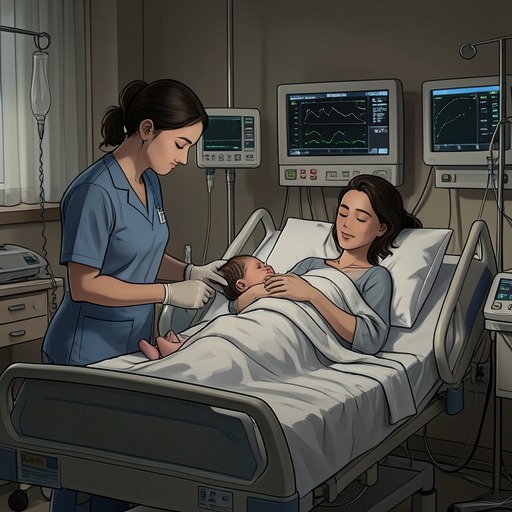
Abbie and Emma
Tiny Beautiful Things: Advice on Love and Life from Dear SugarAbbie and Emma are mother and infant daughter, bound in the evidence by Abbie’s urgent responsibility to protect a child too young to understand the danger facing her. When doctors discover a tumor in six-month-old Emma, the possibility of brain surgery makes their closeness newly precarious: Abbie fears not only that Emma might die, but also that she could be paralyzed, face developmental difficulties, or need chemotherapy. The relationship is presented through a mother’s fear for the vulnerable future of her child and her desire to get through the crisis together with her family.
A Mother Confronts the Diagnosis
Abbie writes from a small couch-bed in the Pediatric Intensive Care Unit at Egleston Children's Hospital in Atlanta, where she and her husband have learned that Emma has a tumor. Surgery is scheduled for the next day. The setting concentrates the family’s attention on an immediate uncertainty: the tumor may be cancerous, and even if Emma survives the operation, Abbie worries about lasting effects on her daughter’s movement and development. Her repeated focus on Emma’s infancy makes the stakes intimate and concrete. Emma is only six months old, yet her mother is already imagining the difficult life that might follow the operation.
The crisis also displaces the assumptions Abbie had held about her own life. She says she never imagined that she and her husband would be in this situation. People have sent thoughts and prayers, but the possibility of a life-threatening operation draws her toward questions she had not previously settled. Her fear is inseparable from her attachment to Emma: the uncertainty about what the tumor means becomes uncertainty about whether the future Abbie wants for her daughter will be possible.
Fear, Faith, and the Wish for an Ordinary Future
Abbie has never been strongly religious, and the diagnosis intensifies her doubts about God. She struggles to reconcile the idea of a God with the possibility that an infant might have to undergo life-threatening surgery. At the same time, she asks Sugar and the column’s readers to pray for Emma, even while acknowledging that she is unsure she believes in the God to whom those prayers would be addressed. The contradiction is not resolved before the operation; it records how fear can make prayer both a request for help and a test of belief.
Her hope is modest and enormous at once: she wants Emma to be all right, to get through the crisis with her husband and daughter, and eventually to look back with gratitude that everything turned out well. She also wishes they could forget the experience. That wish shows how completely the medical emergency has taken over the family’s present. For Abbie, a hoped-for return to ordinary life would mean more than an end to immediate danger; it would mean being able to imagine Emma’s future without the words tumor, surgery, and cancer governing it.
Surgery and the Changed Terms of Hope
In a follow-up letter, Abbie reports that Emma’s surgery went well. Doctors believe the tumor is benign, but they leave a very small portion because it is attached to a blood vessel and an attempt to remove it could permanently paralyze Emma. The outcome therefore brings substantial relief without eliminating every uncertainty: the operation succeeds, while a remnant remains and the family still hopes the tumor will not return. Emma recovers so well that even the doctors seem surprised, and the family expects to go home the next day.
The news changes the emotional ground on which Abbie’s relationship with Emma is being lived. Her first letter is written before surgery, amid fears of death, paralysis, impaired development, and chemotherapy; the follow-up can report recovery and a likely return home. Abbie hopes the successful operation and the good news about the tumor might be signs that God exists and that prayer helped keep Emma safe. Yet she does not present that interpretation as certain. She remains aware that the outcome might be coincidence, and the question of faith stays open even as the immediate danger recedes.
An Ongoing Bond of Care and Uncertainty
Abbie’s letters portray care as both action and attention: she remains with Emma in the hospital, faces the operation’s possible consequences, asks others to pray, and keeps watch on her daughter’s recovery. Her concern extends beyond survival to the life Emma may lead afterward. The relation is therefore not defined by a simple passage from fear to reassurance. The successful operation gives Abbie grounds for hope, but the retained portion of the tumor and her continuing wish that it will not return preserve the uncertainty that first brought her to write.
Sugar responds by expressing relief that Emma has come through surgery well and hopes that the family can move forward into a future not dominated by illness and medical procedures. In the exchange, Emma’s recovery is the central event, while Abbie’s unsettled belief remains part of the aftermath. Motherhood here does not require Abbie to settle the question of God before she can love or care for Emma; her actions and hopes persist alongside doubt. Their bond is shown through the scale of what Abbie fears losing and through her continued attention to what Emma will need next.